Links
Important Dates
Last date for full Submission Deadline:
January 15, 2027
Last date for full Notification of Acceptance:
February 15, 2027
Last date for full Camera Ready Submission:
March 15, 2027
Contact Us
Secretary Office
icbeps@iaast.cn
Keynote Speakers
-
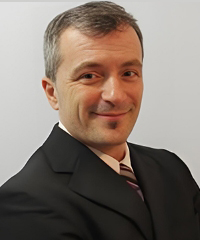
Carlos M. Travieso-González
Research field:Biometrics, Biomedical signals and images, Data mining, Classification system, Signal and image processing, Machine learning, and Environmental intelligence.
Professor, University of Las Palmas de Gran Canaria, Spain.
Carlos M. Travieso-González received the M.Sc. degree in 1997 in Telecommunication Engineering at Polytechnic University of Catalonia (UPC), Spain; and Ph.D. degree in 2002 at University of Las Palmas de Gran Canaria (ULPGC-Spain). He is a full professor of signal processing and pattern recognition and is head of the Signals and Communications Department at ULPGC, teaching from 2001 on subjects on signal processing and learning theory. His research lines are biometrics, biomedical signals and images, data mining, classification system, signal and image processing, machine learning, and environmental intelligence. He has researched in 52 international and Spanish research projects, some of them as head researcher. He is co-author of 4 books, co- editor of 27 proceedings books, guest editor for 8 JCR- ISI international journals, and up to 24 book chapters. He has over 450 papers published in international journals and conferences (81 of them indexed on JCR– ISI- Web of Science). He has published seven patents in the Spanish Patent and Trademark Office. He has been a supervisor on 8 Ph.D. theses (11 more are under supervision), and 130 master theses. He is the founder of The IEEE IWOBI conference series and the president of its Steering Committee, as well as the founder of both the InnoEducaTIC and APPIS conference series.He is an evaluator of project proposals for the European Union (H2020), Medical Research Council (MRC, UK), Spanish Government (ANECA, Spain), Research National Agency (ANR, France), DAAD (Germany), Argentinian Government, and the Colombian Institutions. He has been a reviewer in different indexed international journals (& lt; 70)and conferences (& lt; 250) since 2001.
-
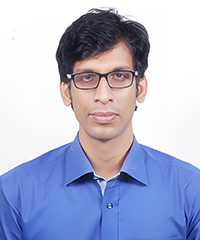
Shaharior Rahman Razu
Research field:Public health, Gender inequality, Sociology.
Associate Professor, Khulna University, Bangladesh.
Shaharior Rahman Razu is an Associate Professor at Khulna University, currently pursuing a Ph.D. on COVID-19 health management at the University of New England in Australia, where he also works as a Casual Academic. Previously, he completed doctoral research training at Chiang Mai University in Thailand and earned his undergraduate (1st position) and master’s (1st position) degrees in Sociology from Khulna University. In addition to teaching, Razu has published over 40 research articles in various journals focusing on public health, gender inequality, and sociology. He currently serves as an editor and reviewer for several international journals, including BMC Public Health (Springer Nature) and the Journal of Women’s Studies (Bridgewater State University, USA).
-
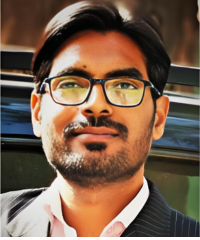
Omkar Singh Kushwaha
Research field:Biomaterials, Synthesis, Material Characterization, Thin Films and Nanotechnology, Polymers, Nanomaterials, Nanoparticle, Nanomaterials Synthesis, Nanostructured Materials.
Senior Principal Project Scientist, Chemical Engineering Department, Indian Institute of Technology Madras Chennai, India.
Dr. Kushwaha is recipient of DST-SERB & CSIR Projects for independent research. He is a multidisciplinary Scientist, with experience of teaching & research of Chemistry, Engineering, Polymers, Materials, Nanomaterials & Biomaterials, Composites, High pressure reactions, contaminated water-treatment, and many more. Dr. Kushwaha is open to world-wide collaborations across all disciplines of research in order to learn, share and promote science and technology.
-
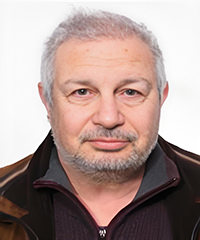
Dimitrios A. Karras
Research field:Intelligent & distributed systems, multiagent systems, pattern recognition and computational intelligence, image & signal processing/systems, biomedical systems, communications and networking.
Associate Professor, National and Kapodistrian University of Athens (NKUA), Greece.
Assoc. Prof. Dr. Dimitrios A. Karras received his Diploma and M.Sc. Degree in Electrical and Electronic Engineering from the National Technical University of Athens (NTUA), Greece in 1985 and the Ph.D in Electrical Engineering, NTUA, Greece in 1995, with honors. During 1990-2004 he collaborated as visiting professor and researcher with several universities and research institutes in Greece and Heidelberg, Germany (DKFZ). During 2004-2018 he has been with the Sterea Hellas Institute of Technology, Automation Dept., Greece as assoc. prof. in Digital Systems and Signal Processing, as well as visiting prof. of Hellenic Open University, Dept. Informatics in Communication Systems (2002-2010). Since 1/2019 is Associate Prof. in Digital and Intelligent Systems & Signal Processing, in National & Kapodistrian University of Athens, Greece, School of Science, Dept. General as well as adjunct Assoc. Prof. Dr. with the School of Basic Sciences, BIHER University, Chennai, India, as well as with the GLA university, Mathura, India and EPOKA & CIT universities, Computer Engineering Dept., Tirana. He has published more than 80 research refereed journal papers in intelligent and distributed/multiagent systems, pattern recognition, image/signal processing and neural networks as well as in bioinformatics and more than 185 research papers in International refereed scientific Conferences. His research interests span the fields of intelligent & distributed systems, multiagent systems, pattern recognition and computational intelligence, image & signal processing/systems, biomedical systems, communications and networking as well as security and sustainability applications. He has served as program committee member as well as program/general chair at several international workshops and conferences in signal, image, communication and automation systems. He has been cited in more than 2500 research papers, and his H/G-indices are 21/51 (Google Scholar) and his Erdos number is 5. His RG score is 31.94 , in the highest 10% of scientific researchers.
-
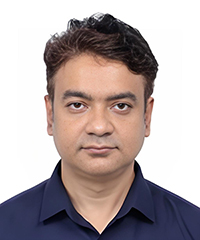
M. SHAMIM KAISER
Research field:Data analytics, Machine learning, Wireless network & Signal processing, Cognitive radio networks, Big IoT data, Healthcare, Neuroinformatics, and Cyber security.
Professor, Jahangirnagar University, Bangladesh.
Dr. Kaiser holds a Bachelor's and Master's degree in Applied Physics Electronics and Communication Engineering from the University of Dhaka, Bangladesh, and a Ph.D. degree in Telecommunication Engineering from the Asian Institute of Technology (AIT) Pathumthani, Thailand. He worked as a postdoc fellow at Anglia Ruskin University's Big data and Cyber Security Lab and as a Special Research Student at Tohoku University's Wireless Signal Processing and Networking Lab. His research interests include Data Analytics, Machine Learning, Wireless Network & Signal processing, Cognitive Radio networks, Big IoT data, Healthcare, Neuroinformatics, and Cyber Security. Dr. Kaiser has authored over 150 papers in various peer-reviewed journals and conferences. He is a member of several societies, including the Bangladesh Electronic Society, Bangladesh Physical Society, and NOAMI, and is the founding Chapter Chair of the IEEE Bangladesh Section Computer Society Chapter.
-
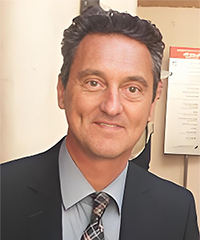
Michele Biasutti
Research field:psychology, ICT in education, e-learning, Education for sustainable development (ESD), Project evaluation, Research methods in education, Teacher Education, virtual creativity, Knowledge management.
Full Professor, University of Padua, Italy.
Michele Biasutti PhD, Associate professor at Padova University, has experience in Education for Sustainable Development, awareness on development, both as researcher and Consultant. Deep understanding of EC policies, methodologies and working methods gained through an involvement in EC founded programs, project and institutions.
He is a member of the board of Italian Associations and Scientific Director of research projects financed by Italian and EU Institutions.
He is a member of the editorial board of international journals and he has published articles in international peer-reviewed journals. He was the conference director of international conferences and author of seven books.
Since 2007 he is actively participating in the Mediterranean Universities Network on Sustainable Development focusing on Education for Sustainable Development.
-

Oon Chern Ein
Research field:Molecular Oncology; Sirtuin; Notch Signalling; Tumour Angiogenesis; Drug Discovery, Cancer-Targeted Therapies; Bioengineering Solutions.
Associate Professor, Universiti Sains Malaysia, Malaysia.
Associate Professor Dr. Oon Chern Ein is dedicated to advancing innovative cancer therapies. She earned her BSc (First Class Hons) in Biotechnology from Universiti Kebangsaan Malaysia and pursued her DPhil in Medical Oncology at the University of Oxford, United Kingdom. Following this, she trained as a postdoctoral fellow at Karolinska Institutet, Sweden. She has served as a lecturer at Universiti Sains Malaysia since 2013. Chern's work in molecular therapeutics has earned her numerous prestigious awards, including the L'Oreal-UNESCO For Women in Science National Fellowship (2015), the Women of the Future Awards (South East Asia), and the Malaysian National Young Scientist Award (2018). She was further recognized with the Promising Academician Award and Excellent Service Award by the Malaysian Ministry of Higher Education (2019), alongside the British Council Study UK Alumni Award (Professional Achievement Category) and MINDS Women Scientist Award in 2020. Most recently, she received the Singapore Academies-ASEAN Fellowship from the Singapore National Research Foundation to train in drug discovery at A*STAR Singapore to strengthen her industrial insights. Her multidisciplinary research encompasses drug discovery, cancer-targeted therapies, and bioengineering solutions through collaborations with industry partners. She holds two granted patents in Malaysia (MY-203445-A, MY-199524-A) for small molecule inhibitors targeting anti-cancer and anti-angiogenesis pathways. As a member of the Global Young Academy, Chern actively champions female empowerment and education for all. Chern's research continues to bridge academia and industry, striving to transform cancer therapy through novel therapeutic strategies.
-
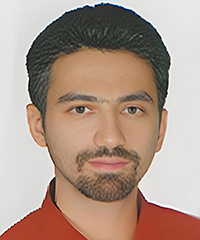
Mehdi Gheisari
Research field:Privacy Protection; Transformative Power; Artificial Neural Network; Autonomous Vehicles; Control Plane; Current Difference; Dependability; Differential Protection; Differential Scheme; Empirical Mode Decomposition; Fast Fourier Transform; Gradient Difference.
Professor, Islamic Azad University, Iran.
Mehdi Gheisari received the B.S. degree in computer engineering from Shiraz University, Shiraz, Iran, and the M.Sc. degree in computer engineering from Science and Research University, Tehran, Iran. He is currently working toward the Ph.D. degree with the School of Computer Science and Educational Software, SUSTECH, Shenzhen, China. He has taught in variety of Universities as a Professor of courses like data base and operating system. Since 2007, he has been with Karaj University, Karaj, Iran, ShamsiPour College, Bahonar College, Damavand branch, Parand Branch, Islamic Azad University, Tehran, Iran. He has authored or coauthored 13 research articles in journals and 29 conference papers, one book and two patents contributed as author/co-author. His research interests include wireless sensor networks (monitoring, routing, event detection), semantic web and related technologies (RDF, ontologies), and programming (Net). He is a Member of Geo-Information and Communication Technology Society, Young Researchers Club of IAU, and an Associative Member of the Universal Association of computer of Computer & Electronics Engineers. He is alos an Associate Editor and Reviewer of ISI journal, such as the Indian Journal of Science and Technology, Reviewer of the International Journal of Wireless Information Networks, WSEAS journals in the field of semantic web and sensor networks, International Journal of Computer and Information Technology, and an Expert Reviewer and the Guest Editor of the Indian Journal of Innovations and Developments.